
Happy Helpers: Growing Responsibility in Early Childhood
 If you’ve been following the blog the last few months, we’ve been focusing on growing character qualities in young children. Despite what many think, virtues like gratitude, generosity, courage and kindness are not inherent in kids. The good news is, character can be taught and grown in children in everyday moments through the use of language, play and practice! Today we are going to explore ways we can grow the quality of responsibility in small children. We will discuss what responsibility is appropriate at different ages and how to know when your little one is ready for more!
Why Responsibility Matters in Early Childhood
When you hear the word “responsibility,” you may picture older children managing chores and homework. But responsibility actually begins much earlier, in the toddler and preschool years! When you begin teaching your little ones, you may even discover your child is eager to help! At Wishing Well, children are given opportunities to distribute snacks to their classmates, be in charge of the calendar, be the line leader, turn off the lights, and throw away trash. These small “jobs” help children build confidence, independence, and a sense of belonging! They are also learning foundational skills like self-control and executive functioning, which will serve them as lifelong learners.
What Age-Appropriate Responsibility looks like
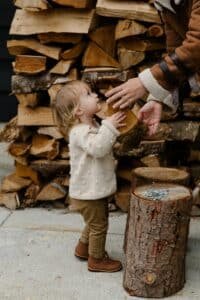 For toddlers and preschoolers, “I do it myself,” isn’t just a phase, it’s a developmental milestone. All of early childhood is preparing our children for new levels of independence. It can be tricky, however, teaching little ones about responsibility without overburdening them. When we begin to teach young children about responsibility, think “participation over pressure.” Our expectation is that they are “helping” and learning how to do certain tasks, not being completely responsible for perfectly completed chores. With this in mind, let’s consider what it means to teach age-appropriate responsibility.
-
- Matches a child’s developmental abilities
All Children are different, so pay close attention to your child’s abilities, and also to their level of frustration as they are learning new responsibilities. - Focuses on effort, not perfection
Does your child have a good attitude and a desire to help? Is he working hard at completing his task, even with difficulty? These are efforts worth celebrating!! - Builds consistency and routine
Examine the goals of the task you are assigning. Are your children learning independence in healthy habits and routines, like brushing their teeth or putting dirty clothes in the hamper? - Helps children feel capable and trusted Does the activity build confidence in your child that they are contributing in a helpful way and can be trusted to complete a role they have been assigned? Perhaps they are in charge of feeding the dog. You make sure it gets done, but they know if they don’t feed the dog, he will go hungry, and they feel happy they can take care, not just of themselves, but of another.
- Matches a child’s developmental abilities
Responsibility by age
Always keep in mind that responsibilities should feel achievable and empowering to children, not overwhelming. Below is a helpful guide as you consider what responsibilitie to give your child.
Responsibility for Toddlers (ages 1-3)
Toddlers are eager helpers, even if the results are messy! When thinking about tasks to offer your toddler, keep in mind this goal: participation, not speed! Your tiniest helpers will build confidence as you encourage independence with support.
Try these Toddler-friendly responsibilities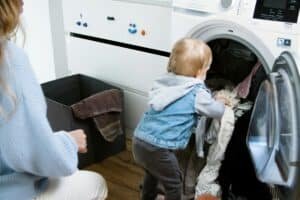
Putting toys into a basket
Carrying their cup to the sink
Helping wipe tables (with supervision)
Choosing between two outfit options
Responsibility for Preschoolers (ages 3-5)
You may be surprised how ready your preschooler is for more complex tasks and responsibilities. At Wishing Well, preschoolers are encouraged to take responsibility with classroom tasks that promote self-esteem and cooperation. As you think about fostering responsibilities at home, consider the following: 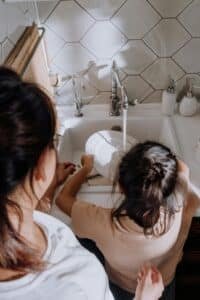
Try these Preschooler-friendly responsibilities
- Setting the table
- Feeding pets
- Watering plants
- Cleaning up activity areas
- Carrying in groceries and helping put them away
A few key ingredients
Teaching any character quality or value often requires similar ingredients. Children learn best through language, play and predictability. Let’s break down what that looks like when teaching responsibility.
Teach through Language
It’s absolutely key that we model responsibility for our children. If we tell them to clean their room and fail to keep our own spaces clean, they may be confused. However, using rich language to help them understand what responsibility looks like, and to encourage it in them, is irreplaceable! Here’s what that might look like:
Instead of creating a sticker chart to track their accomplishments, try using phrases like, “You helped take care of our family dog!” or, “You remembered where the toys go! Good for you!” While stickers may be motivating, and a good visual, research shows that intrinsic motivation is even better. Positive and specific feedback helps strengthen that.
Next, try narrating what you are doing to show responsibility, and why you are doing it. For example, as you are picking up toys, shoes and other “debris” scattered throughout a common room in your home, you may explain, “I’m cleaning up to help keep our space safe!” You can invite your child to join in as you lightheartedly tease, “We wouldn’t want Daddy to trip over these shoes and get a boo boo.” Plus, everyone knows how awful it is to step on a lego! Children will begin to see the value in being responsible, which makes menial tasks more meaningful.
Lastly, you can never go wrong with a good picture book to help young children grasp difficult concepts. As they see themselves in the characters of a story, they can safely wrestle with difficult emotions as they learn to tackle new things. Check out this page for some great suggestions of books that teach young children about this topic!
Teach through Play
Children learn best through play. When children engage in imaginative games like playing house or school, they mimic healthy habits like sweeping up and organizing the kitchen, or preparing school lessons. This gives little ones a safe place to try big tasks without the weight of having them done right, or on time.
Another way to use play in teaching responsibility is by making real chores fun. Put on music and attempt to get the playroom tidied by the end of the song. Sing the clean up song as you put toys into bins. Turn laundry time into a game where kids race to match socks and toss the in a basket. If a task is going to take longer, and feels particularly daunting, whip up some brownies together and accomplish the task while they are baking. Afterwards, share the tasty treat to celebrate a job well done!
Teach through Predictability
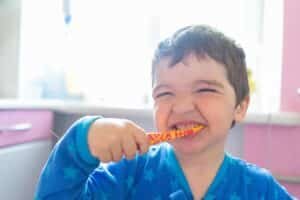 Preschoolers thrive on a good routine. There is little they love more than predictability. You may notice this when you watch their beloved tv shows. Good early childhood education is predictable and uses repeated scenes and phrases to help toddlers and preschoolers learn and build confidence. Since they love knowing what’s coming next, build responsibility into daily routines and create clear expectations. For example, help your child establish routines for self-care and chores that happen in the morning, after school and before bedtime, and do them consistently. This helps build confidence and safety in young children, and prepares them for greater responsibility as they grow.
Growing Responsibility
Sometimes responsibility feels hard, and that’s okay! Toys get missed, spills happen, shoes get put in the wrong cubby. Giving age-appropriate responsibility grows more than healthy habits. It grows happy, capable and confident learners. At home, and at Wishing Well, every small task is an opportunity for growth. Mistakes are part of the process. As we offer guidance, instead of just correction, we can help build resilience and problem-solving skills in your toddlers and preschoolers. We would love to walk alongside you and your children as they learn the key lessons of responsibility: “I matter. I belong. I can do things!” To learn more, book a tour today!
Embracing Hygge with your Preschooler this Winter
 When gray clouds roll around and cold temperatures set in, it’s tempting to want to push through with business as usual and pray for Spring! But each change of season brings with it something special to savor. In Denmark, they call this time hygge (pronounced “hoog-gah”), a concept that celebrates coziness, connection, comfort and simple joys. Winter, by its very nature, invites us into a season of rest and reflection. So grab a cozy blanket, turn on the fireplace, and let’s explore ways you can turn this dark, cold season into a season of warm memories with your little ones!
What is hygge and why do preschoolers love it?
As I stated earlier, Hygge is all about coziness and connection. It’s less about home decor, and more about the calm, welcoming environment you are creating. When it’s dark and cold outside, what ‘s better than low lights from lamps, yummy smelling candles, and a cozy fire? Sprinkle in some familiar traditions or routines, a less busy schedule, and simple moments of connection, and you have created a space that feels inviting and safe.
If you’ve been following along with the blog for a while now, you know that children thrive on predictable routines, warm adult relationships, and environments that make them feel safe and loved. That is what hygge is all about! Read on to find out how you create these spaces in your home, and how we at Wishing Well try to incorporate a little hygge of our own!
How to create a hygge environment at home
Who knew slowing down and getting cozy could be such an important part of childhood development? Well, we did! And it’s good for adults too! Slowing down helps everyone reset and gear up for the longer sunny days Spring and Summer brings. Those days are full of work and play. Here are some ways to embrace the rest Winter has to offer.
Create a cozy space
It’s no surprise that childcare settings can be a little overstimulating. Our classrooms are full of beautiful visual stimulation and bright lights for learning, as well as lots of busy and excited children! This is fine for a few hours, but we know your kiddos need places to calm their minds and bodies. That’s why we create cozy spaces for rest and relaxation. You can do this at home as well!
Consider creating a reading nook with soft lighting, a cozy rug, and some plush pillows and blankets. Throughout the home, you can use soft lamplight, instead of harsh or bright overhead lighting. You may also like the glow of battery-operated candles or twinkle lights, warm or neutral colors for decorating, and lots of cozy blankets and pillows on couches or common spaces, perfect for cuddling up with each other. Consider arranging furniture in a way that invites connection through conversation or shared activities. Next, we’ll discuss some activities that foster that connection hygge is all about!
Hygge inside and out
Snuggle up for storytime!
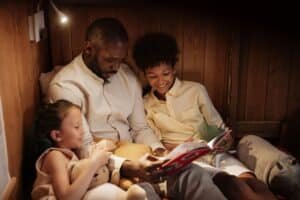 If getting cozy is the goal of hygge, nothing quite fits the bill like cuddling up with a good book! Your preschooler may love plopping on a shag rug or a large floor pillow and flipping through picture books for hours. Perhaps you have a window seat cushion where your child can read while enjoying the winter snow from under a warm blanket. Better yet, cozy up together on the couch by the fire with a cup of cocoa and enjoy a story together. This simple activity brings comfort and connection to your child, not to mention boosting their language development and emotional bonding! There are a million wonderful books to choose from, but I’d be remiss if I didn’t mention one of my favorites, “Bear Snores On,” a sweet story from Karma Wilson’s beloved book series about Bear and his Woodland friends. Nothing says hygge like hibernation, afterall!
Hygge Creativity
Winter is a great time to get crafty, but hygge creativity is all about process over perfection. It’s about connection over the final product. So, when considering creative ways you and your preschooler can spend your time, keep things simple and slow. The possibilities are endless. Consider the following list of cozy creative activities your child can enjoy with you or independently:
- Water Color Painting
- Make play-doh with cinnamon or vanilla scents.
- Cut out paper snow flakes
- Simple winter creations made from recycled materials like empty food containers or toilet paper tubes, string or yarn, popsicle sticks, scraps of paper, cotton balls, etc.
- Coloring sheets with winter scenes or cozy images
Comfort Foods
 There’s something primitive about wanting comfort foods during the cold winter months. Centuries ago, hunters and gatherers needed to put on extra weight to help keep them warm during the bitter cold months. Creating hygge through food isn’t just about eating high calorie foods and loading up on bread. It can also be a sensory experience that fosters warmth and togetherness. Heating up the oven or the stove and serving up a bowl of warm soup or savory cinnamon rolls brings warmth inside and out. The process of preparing tasty and nutritious treats and meals and sharing them together fosters that connection hygge celebrates! You can probably think of many fond memories tied to your kitchen, and maybe even have some traditional dishes you enjoy preparing only in the winter months. So grab our preschoolers, whip up something warm and yummy, and savor the smells and tastes together around your table. Consider lighting a candle for some extra hygge points!
Hygge Outdoors
 So far all we’ve talked about is being warm and cozy, but the hygge philosophy extends to the great outdoors as well! Because hygge embraces simple pleasures and a slower pace, these outdoor activities won’t include snow skiing or epic snowball fights. Outdoor hygge looks more like bundling up and enjoying:
- Outdoor nature walks, crunching through the snow or leaves
- Collecting pinecones for crafts
- Observing winter birds
(You may also consider making these simple bird feeder ornaments to hang on bare, winter trees!)
Slow Down and Enjoy
It seems the key to embracing hygge with your preschooler is pacing. Winter is an invitation to slow down. As you take your cue from nature, with its shorter days and longer nights, you may just find that what preschoolers need- what you need- is not more stimulation, but more connection. What other ways might you create cozy, comfy, connected spaces where you can enjoy simple joys together this winter? We look forward to inviting your little one into our classroom with all the warmth of hygge this winter! If you are curious about Wishing Well, you can book a tour today!
Growing Generosity in Preschoolers
 Your preschooler may be small, but his capacity for generosity is mighty! As the holiday season comes to a close, I bet your kiddo had some opportunities to practice caring and sharing. As the new year begins, you can continue to encourage your preschooler to flex those generosity muscles, because generosity isn’t just for end of the year giving. It’s a virtue that can be taught all year long, and it’s foundational to your child’s early development.
What does generosity look like in preschoolers?
So what does generosity look like in your preschooler? It doesn’t usually show up in grand gestures, but you will find it showing up in small and simple acts of kindness that make a lasting impact. 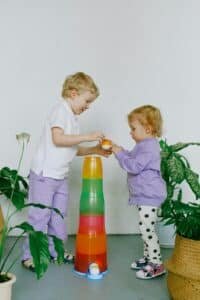
-
- Sharing her toys or craft supplies
- Taking turns without being prompted
- Helping a friend or sibling clean up
- Offering comfort to someone
- Participating in group problem-solving
When you see your child doing any of these things, they are engaging in generosity, which is closely related to empathy development! Between the ages of 3-5, your preschoolers ability to feel and express empathy is really amping up, so be on the look out for these beautiful expressions of kindness and consider the following ways to grow generosity in your child.
How does it grow?
Contrary to popular belief, generosity isn’t instinctual in children, it’s learned! Here are three simple steps you can use to teach your child how to be generous in word and deed!
1. Watch me!
You may be familiar with the old saying, “Do as I say, not as I do,” but all of us know that doesn’t work. Children learn best by watching trusted adults model the type of character we want them to have. We here at Wishing Well always try to model kindness and generosity with our words and actions, and we know you do too! Consider small ways you might encourage your child to share, like bringing extra snacks to the zoo or toys to a playdate that they can share with friends. This helps your child “plan” for generosity. Children tend to be more generous when they have a choice in what they share and when they share it.
2. Name the feeling
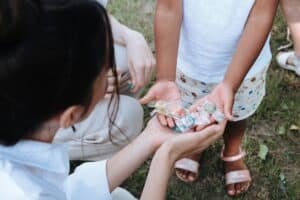 When it comes to teaching young children, literacy is about much more than reading. We also teach our children emotional literacy to help them understand how their actions affect others. When you see your child behave generously toward another child or adult, praise them with rich emotional language like, “You shared your blocks! That helped your friend feel happy!” Or, “I see you noticed she needed help. That was kind of you to step in.” Naming emotions helps build empathy in your little one, which is a building block towards generosity. Additionally, it’s helpful to reinforce your child’s acts of generosity by praising the behavior, not the child. For example, instead of saying, “You’re so nice!” Say, “You gave him a turn, that was very generous of you!” This helps your child understand what they did and what it mattered.
3. Practice, practice, practice!
If generosity is learned, that means it must be practiced over time! At Wishing Well, there are plenty of opportunities for your child to practice generosity as they have shared experience with their classmates. 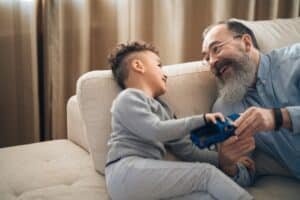 They will participate in class games, group projects and shared mealtimes, where sharing and caring will become second nature! You can help create other opportunities for growing generosity outside of the classroom as well! Think of ways you might encourage your preschooler to consider others when they are playing with siblings or having a playdate with friends. Is there a lonely or elderly neighbor they may bring joy to, or a grandparent that might need a little help? It’s likely your little one is eager to be a big helper, and you can help create those positive opportunities.
Stories as “Gardening Tools”

As you seek to grow generosity in the hearts of your preschoolers, consider reading stories about kindness and compassion. Stories are powerful tools to teach generosity and help children explore emotions and consequences in safe and relatable ways. There are many wonderful books to choose from, but consider “Kindness is my Superpower,” along with the “My Superpower Values” box set by Alicia Ortega.
Growing Generosity Takes Time
Just like anything else that grows, growing generosity in preschoolers takes time, and that’s okay! Preschoolers are still learning impulse control and emotional regulation, so sharing won’t be perfect, and it doesn’t need to be. At Wishing Well, we love partnering with parents as they plant seeds of kindness, water them with encouragement and modeled behavior, and wait for generosity to take root. Because growing generosity isn’t just about taking turns, it’s about shaping kind and compassionate humans for the future! If you’d like to learn more about Wishing Well, book a tour today!
Curbing the Christmas Crazies
 It’s the most wonderful time of the year! Lights are twinkling, sugar is glistening, and everything feels a little more magical…and a little more unhinged. Have you noticed your children are cranky, teary and having more meltdowns than usual? Does this sudden shift in holiday cheer have you feeling perplexed? “The Christmas Crazies” are not just your imagination. Research shows that changes in routine, extra sensory stimulation (read all those twinkling lights and holiday music), and adult stress (shopping, wrapping, keeping surprises, holiday parties, family expectations) all impact young children. But don’t worry! With over a week left before Christmas, there is still time to curb the chaos while keeping the joy alive!
Why the Christmas Crazies Happen
 Young children thrive on predictability. While Christmas brings with it a lot of fun, it also brings major disruptions to your child’s typical rhythms. Holiday parties, visitors and decorations may mean extra sugar, late nights, and increased sensory input. Consistent routines help regulate your child’s stress responses, but the regular shifts in these routines to accommodate holiday festivities can overload your little one’s nervous system. Consider the ways chaos may be creeping into your holiday plans this season, and feel empowered to make choices that help curb the crazy!
Choose Calm over Chaos
One of the number one stressors for kids during the holidays is experiencing their parents’ stress. Did you know young children are incredibly in-tune to our emotions, and they experience them with us? That means, if you are stressed, they are stressed too. Adults often feel pressure to “do it all,” during the Christmas season. But the best gift we can give our children is Calm.
Chaos is contangious, but so is calm. So, give yourself permission to choose carefully what events you will participate in this year, and which you will leave behind to make sure everyone is feeling regulated. This may look like saying no to a party invitation, leaving an event early to get the kids in bed on time, making fewer purchases, or using store-bought appetizers and desserts or paper plates to take the stress out of hosting a holiday gathering. Taking care of what’s stressing you will actually help bring calm to your kiddo.
Keep the routine (mostly) sacred
 You don’t have to cancel all the holiday fun, but anchoring the day or week with familiar routines goes a long way. Keep meal times, rest times and transitions as consistent as possible. If you have to stay out late for one special activity this season, consider what the recovery time will be like. Back to back parties or late nights multiple days in a row are almost always a recipe for meltdowns. Take some time to consider what your individual child needs most to help him or her feel cared for this season. It’s possible your child loves a late night party, but is a grinch the next day. It’s also helpful to remember that while you may be ready to celeberate, your little one may be too pooped to party.
Channel the energy, don’t fight it!
Movement is regulation. When your preschooler is feeling overstimulated by all the Christmas magic, moving their body is actually a way to channel that energy! While it’s tempting to ask them to sit still and be calm, movement is the key to accessing that calm. Here at Wishing Well, we like to get creative with the Christmas Crazies, and you can incorporate these fun activities at home, as well!
- Consider creating a “reindeer games” obstacle course in your basement.
- Play “freeze dance” to Christmas songs in just about any room in the house! Put on your favorite holiday tunes, let the kids wiggle, and when you push pause, they FREEZE until you start the music again.
- Another fun game is the Santa Sack bean bag toss. Let your kids practice tossing bean bags into a bucket, or hitting a target you create on the floor with tape or paper squares.
Teach Emotions Alongside Festivities
Children experience big emotions around the holidays like anticipation, disappointment, and overstimulation. But they often lack the language to express them. The month of December offers an incredible opportunity to teach social-emotional regulation to your children, which is foundational to early childhood development. Look for books that teach children about waiting and patience like, “I’ll Wait, Mr. Panda.” Use visuals like an emotion wheel to help your child develop language around what they are feeling.  If your child is feeling particularly overstimulated, consider leading them through a simple breathing exercise like “smell the cocoa” where they are prompted to take a deep breath in through their nose and imagine smelling a warm cup of hot chocolate, and “blow out the candle” where you prompt them to blow out their mouth like they are blowing out a candle. You may be surprised how taking just 15-30 seconds can help reset your little one and have them back enjoying all the fun this season has to offer.
Less Chaos, More Magic
Curbing the Christmas Crazies doesn’t mean eliminating joy, it means protecting it! We at Wishing Well are committed to partnering with you to create calm and festive experiences for your children. As we work together to prioritize routines, teach emotional regulation, and create intentional fun, children can experience the holidays as fun instead of overwhelming. And that’s a real gift. The best memories are not made in chaos, but in spaces where children feel safe, understood, and just festive enough. If you’re interested in joining us, book a tour with us today!
The Kitchen: The Heart of the Home
 With the Thanksgiving holiday just barely in our review mirror, and the Christmas season positioned squarely before us, most of us have visions of more than just sugarplums dancing in our heads! It’s a well-known fact that food is at the heart of every good holiday celebration, and it turns out that scientific research actually backs up the truth we already knew: the kitchen is the relationship hub, the heart of the home. While food has been said to be the way to a man’s heart, the kitchen is a space where communication, culture and connection are passed down to the next generation. So grab your toddlers and your preschoolers, don your best apron, and get ready for some quality time in the kitchen this holiday season!
What the Kitchen Teaches our Children
If you think back to your own childhood, you may have rich memories connected to cooking, baking and eating special foods with your family. We intuitively know that the kitchen is more than a place to make food, it’s a place to make memories and connections. It also functions as an incredible classroom, rich with language, culture, motor skills, and math and science lessons.
🍲 1. The kitchen is a language-rich environment
Did you know that children hear more back-and-forth conversations in the kitchen than in any other room of the house besides the bedroom? You may have noticed when you have company over, that people tend to gravitate to, and congregate in, the kitchen.
When kids help cook, they learn important age-appropriate cognitive and language skills like :
- new vocabulary (“stir,” “measure,” “soften”)
- sequencing (“first we wash, then we chop”)
- descriptive language (“smooth,” “crunchy,” “warm”)
These types of conversations are essential for early literacy development, which is at the core of early childhood education.
🍎 2. Meals strengthen emotional bonds
It’s no secret that family mealtime is linked to stronger parent-child attachment, better communication, and higher self-esteem in children. Preschoolers especially thrive in the routine of regular family mealtimes. Around the table, stories are shared, feelings are processed, traditions are passed down, and children feel seen and included. Additionally, when children are invited into meal prep, they experience similar benefits of attachment, cultural traditions and inclusion, boosting confidence and self-esteem.
✋ 3. Hands-on kitchen activities boost fine-motor skills
Inviting preschoolers to participate in meal prep is a fun and creative way to boost fine-motor skills. Cracking eggs, stirring batter, washing veggies activate the fine-motor muscles children will later use for writing. In fact, occupational therapists emphasize kitchen play because: 
- it builds coordination
- it strengthens finger muscles
- it promotes bilateral hand use (using both hands at once)
This is why play kitchens are such a popular station in our preschool classrooms at Wishing Well!
🎓 4. Cooking introduces real-world math and science
Researchers argue that cooking is one of the most “naturally educational” activities young children can do. In the kitchen, preschoolers explore:
- Math: counting scoops, comparing sizes, measuring cups
- Science: melting, mixing, dissolving, heating, cooling
- Cause-and-effect: “What happens if we add too much water?”
The kitchen is a real-life, delicious, STEM lab!
Kitchen Play at Wishing Well
Wishing Well knows the value of the kitchen and corporate mealtimes! When your child enrolls at Wishing Well, they will have the opportunity to mimic the learning a real kitchen has to offer through pretend play. Research shows that imaginative kitchen play fosters social negotiation, role modeling and intentional language that leads to greater attention spans and self-confidence.
Additionally, your child will have the opportunity to practice real-life routines—preparing food, setting tables, serving meals—mirroring the comforting patterns they know at home. We offer this through :
🍽️ Shared meals and Cooking activities 🧁
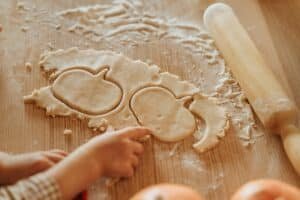 At Wishing Well, snack time and lunchtime are relational experiences rather than a functional one. Our teachers engage with children, talk, laugh, and model social skills—just like a family kitchen table.
Simple cooking activities like making fruit salad or spreading cream cheese on a bagel can empower children. We often hear phrases like this spoken with pride,
“I made this.”
“I helped.”
“I can do this myself.”
Confidence is an essential ingredient in your child’s early childhood education at Wishing Well.
The Kitchen Is More Than a Room
As we have seen, the kitchen is more than a room,
It’s a classroom, a memory-maker, a community-builder, a sensory playground, and a love language.
In both the home and at preschool, the kitchen is where children learn some of life’s most important skills: connection, confidence, communication, and care—for themselves and for others.
As you enter the hustle and bustle of the holiday season, we hope you will take the time to gather around the table regularly as a family, and to invite your preschoolers into the fun of baking and making some of your family’s holiday favorites! These small experiences will remind you that the kitchen is not just for filling tiny tummies, but for shaping your child’s heart, through memories that will last a lifetime.
Happy Holidays, from our kitchen to yours!
Growing Gratitude in Preschoolers

If you walk into any store, drive down any street, or turn on your television or radio, it’s easy to see that the Christmas season is upon us. The decorations pop up earlier and earlier every year, and it’s easy to blow right past a holiday that invites us to slow down, pause, and be thankful. I can’t help but wonder if the season of Thanks was perfectly positioned to usher us into the season of JOY that Christmas brings. So before your little family gets swept away into the busyness of the season, consider how you can grow gratitude in the hearts of your children.
More than Manners
It’s not hard to teach our kiddos to say, “thank you,” when someone gives them a gift, or says or does something kind for them. We do this in simple ways, like modeling our own gratitude in front of them, or by prompting them to pause to express thanks with phrases like, “what do you say?” These are the ways in which we prepare the soil of their hearts to begin growing gratitude. In the beginning, we are teaching our children social niceties. But over the years, you will see that gratitude is about more than manners. It is a character trait that pushes back on entitlement, increases social connection and empathy, and leads to less feelings of stress and more feelings of joy in adulthood.
 Growing Gratitude
Believe it or not, children are not born with a strong moral compass. It is our job as parents and educators to teach them what matters. Here at Wishing Well, we love to partner with the work you are already doing to help your child grow in gratitude. Here are a few ideas to get started!
Model Gratitude:
Children learn positive social behavior by watching adults. At Wishing Well, your child might hear us express gratitude to a helpful child by saying, “I really appreciate how Avery helped put away those books! That sure made my job easier.” In this way, we help teach your child what gratitude sounds like.
Storytime
Few things are more powerful than a good book when it comes to teaching concepts to children. There are many wonderful books to help teach children about gratitude. When sharing a story with your little one, as questions like, “How did that character feel when someone helped them? How did he show thanks?”
Gratitude Rituals
Preschoolers love routines! There are many creative ways you can incorporate the practice of daily gratitude. Consider putting up a bulletin board in your home and using colored pieces of paper to write down and display things you are thankful for. Feel free to use words or pictures! Additionally, you could use a “thankful jar.,” to keep track of the things you and your children are thankful for. Then, periodically pull out the pieces of paper and remember what you have been thankful for over the weeks and months.
Simple Acts of Kindness
 Encourage your child to express their appreciation through simple acts of kindness. They may want to draw a picture for a friend, bring a small gift to a teacher, or give a hug. They may even choose to help a sibling after a sibling helped them, or simply say, “thank you.” Regardless of the act, be sure to praise them for their thoughtfulness!
What if they don’t get it?
Don’t worry if your child doesn’t pick up on gratitude right away. Remember, gratitude is grown over time, and every child will develop the quality over time. Just keep modeling and prompting positive behaviors, and pretty soon they will begin showing gratitude all on their own! It’s also important to remember that children will learn to practice polite behavior before internalizing true gratitude. Don’t lose sight of their hearts! If your child forgets to say thank you, don’t scold them. Instead, consider how you might foster empathy and encourage kindness by helping them to consider others
We at Wishing Well are honored to be co-growers of gratitude in the hearts of your little ones. Teaching thankfulness is a powerful part of growing young hearts and minds to be life-long learners. Happy Thanksgiving!