
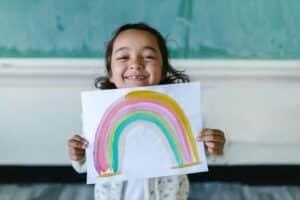
 Your preschooler may be small, but his capacity for generosity is mighty! As the holiday season comes to a close, I bet your kiddo had some opportunities to practice caring and sharing. As the new year begins, you can continue to encourage your preschooler to flex those generosity muscles, because generosity isn’t just for end of the year giving. It’s a virtue that can be taught all year long, and it’s foundational to your child’s early development.
What does generosity look like in preschoolers?
So what does generosity look like in your preschooler? It doesn’t usually show up in grand gestures, but you will find it showing up in small and simple acts of kindness that make a lasting impact. 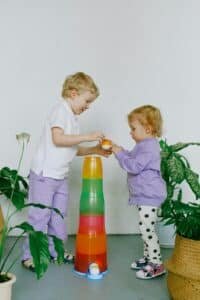
-
- Sharing her toys or craft supplies
- Taking turns without being prompted
- Helping a friend or sibling clean up
- Offering comfort to someone
- Participating in group problem-solving
When you see your child doing any of these things, they are engaging in generosity, which is closely related to empathy development! Between the ages of 3-5, your preschoolers ability to feel and express empathy is really amping up, so be on the look out for these beautiful expressions of kindness and consider the following ways to grow generosity in your child.
How does it grow?
Contrary to popular belief, generosity isn’t instinctual in children, it’s learned! Here are three simple steps you can use to teach your child how to be generous in word and deed!
1. Watch me!
You may be familiar with the old saying, “Do as I say, not as I do,” but all of us know that doesn’t work. Children learn best by watching trusted adults model the type of character we want them to have. We here at Wishing Well always try to model kindness and generosity with our words and actions, and we know you do too! Consider small ways you might encourage your child to share, like bringing extra snacks to the zoo or toys to a playdate that they can share with friends. This helps your child “plan” for generosity. Children tend to be more generous when they have a choice in what they share and when they share it.
2. Name the feeling
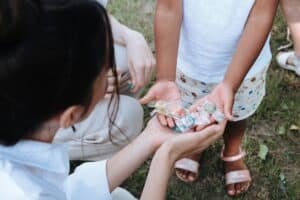 When it comes to teaching young children, literacy is about much more than reading. We also teach our children emotional literacy to help them understand how their actions affect others. When you see your child behave generously toward another child or adult, praise them with rich emotional language like, “You shared your blocks! That helped your friend feel happy!” Or, “I see you noticed she needed help. That was kind of you to step in.” Naming emotions helps build empathy in your little one, which is a building block towards generosity. Additionally, it’s helpful to reinforce your child’s acts of generosity by praising the behavior, not the child. For example, instead of saying, “You’re so nice!” Say, “You gave him a turn, that was very generous of you!” This helps your child understand what they did and what it mattered.
3. Practice, practice, practice!
If generosity is learned, that means it must be practiced over time! At Wishing Well, there are plenty of opportunities for your child to practice generosity as they have shared experience with their classmates.  They will participate in class games, group projects and shared mealtimes, where sharing and caring will become second nature! You can help create other opportunities for growing generosity outside of the classroom as well! Think of ways you might encourage your preschooler to consider others when they are playing with siblings or having a playdate with friends. Is there a lonely or elderly neighbor they may bring joy to, or a grandparent that might need a little help? It’s likely your little one is eager to be a big helper, and you can help create those positive opportunities.
Stories as “Gardening Tools”

As you seek to grow generosity in the hearts of your preschoolers, consider reading stories about kindness and compassion. Stories are powerful tools to teach generosity and help children explore emotions and consequences in safe and relatable ways. There are many wonderful books to choose from, but consider “Kindness is my Superpower,” along with the “My Superpower Values” box set by Alicia Ortega.
Growing Generosity Takes Time
Just like anything else that grows, growing generosity in preschoolers takes time, and that’s okay! Preschoolers are still learning impulse control and emotional regulation, so sharing won’t be perfect, and it doesn’t need to be. At Wishing Well, we love partnering with parents as they plant seeds of kindness, water them with encouragement and modeled behavior, and wait for generosity to take root. Because growing generosity isn’t just about taking turns, it’s about shaping kind and compassionate humans for the future! If you’d like to learn more about Wishing Well, book a tour today!