
 If you’ve been following the blog the last few months, we’ve been focusing on growing character qualities in young children. Despite what many think, virtues like gratitude, generosity, courage and kindness are not inherent in kids. The good news is, character can be taught and grown in children in everyday moments through the use of language, play and practice! Today we are going to explore ways we can grow the quality of responsibility in small children. We will discuss what responsibility is appropriate at different ages and how to know when your little one is ready for more!
Why Responsibility Matters in Early Childhood
When you hear the word “responsibility,” you may picture older children managing chores and homework. But responsibility actually begins much earlier, in the toddler and preschool years! When you begin teaching your little ones, you may even discover your child is eager to help! At Wishing Well, children are given opportunities to distribute snacks to their classmates, be in charge of the calendar, be the line leader, turn off the lights, and throw away trash. These small “jobs” help children build confidence, independence, and a sense of belonging! They are also learning foundational skills like self-control and executive functioning, which will serve them as lifelong learners.
What Age-Appropriate Responsibility looks like
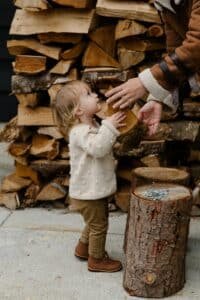 For toddlers and preschoolers, “I do it myself,” isn’t just a phase, it’s a developmental milestone. All of early childhood is preparing our children for new levels of independence. It can be tricky, however, teaching little ones about responsibility without overburdening them. When we begin to teach young children about responsibility, think “participation over pressure.” Our expectation is that they are “helping” and learning how to do certain tasks, not being completely responsible for perfectly completed chores. With this in mind, let’s consider what it means to teach age-appropriate responsibility.
-
- Matches a child’s developmental abilities
All Children are different, so pay close attention to your child’s abilities, and also to their level of frustration as they are learning new responsibilities. - Focuses on effort, not perfection
Does your child have a good attitude and a desire to help? Is he working hard at completing his task, even with difficulty? These are efforts worth celebrating!! - Builds consistency and routine
Examine the goals of the task you are assigning. Are your children learning independence in healthy habits and routines, like brushing their teeth or putting dirty clothes in the hamper? - Helps children feel capable and trusted Does the activity build confidence in your child that they are contributing in a helpful way and can be trusted to complete a role they have been assigned? Perhaps they are in charge of feeding the dog. You make sure it gets done, but they know if they don’t feed the dog, he will go hungry, and they feel happy they can take care, not just of themselves, but of another.
- Matches a child’s developmental abilities
Responsibility by age
Always keep in mind that responsibilities should feel achievable and empowering to children, not overwhelming. Below is a helpful guide as you consider what responsibilitie to give your child.
Responsibility for Toddlers (ages 1-3)
Toddlers are eager helpers, even if the results are messy! When thinking about tasks to offer your toddler, keep in mind this goal: participation, not speed! Your tiniest helpers will build confidence as you encourage independence with support.
Try these Toddler-friendly responsibilities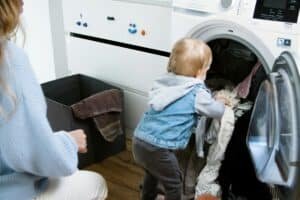
Putting toys into a basket
Carrying their cup to the sink
Helping wipe tables (with supervision)
Choosing between two outfit options
Responsibility for Preschoolers (ages 3-5)
You may be surprised how ready your preschooler is for more complex tasks and responsibilities. At Wishing Well, preschoolers are encouraged to take responsibility with classroom tasks that promote self-esteem and cooperation. As you think about fostering responsibilities at home, consider the following: 
Try these Preschooler-friendly responsibilities
- Setting the table
- Feeding pets
- Watering plants
- Cleaning up activity areas
- Carrying in groceries and helping put them away
A few key ingredients
Teaching any character quality or value often requires similar ingredients. Children learn best through language, play and predictability. Let’s break down what that looks like when teaching responsibility.
Teach through Language
It’s absolutely key that we model responsibility for our children. If we tell them to clean their room and fail to keep our own spaces clean, they may be confused. However, using rich language to help them understand what responsibility looks like, and to encourage it in them, is irreplaceable! Here’s what that might look like:
Instead of creating a sticker chart to track their accomplishments, try using phrases like, “You helped take care of our family dog!” or, “You remembered where the toys go! Good for you!” While stickers may be motivating, and a good visual, research shows that intrinsic motivation is even better. Positive and specific feedback helps strengthen that.
Next, try narrating what you are doing to show responsibility, and why you are doing it. For example, as you are picking up toys, shoes and other “debris” scattered throughout a common room in your home, you may explain, “I’m cleaning up to help keep our space safe!” You can invite your child to join in as you lightheartedly tease, “We wouldn’t want Daddy to trip over these shoes and get a boo boo.” Plus, everyone knows how awful it is to step on a lego! Children will begin to see the value in being responsible, which makes menial tasks more meaningful.
Lastly, you can never go wrong with a good picture book to help young children grasp difficult concepts. As they see themselves in the characters of a story, they can safely wrestle with difficult emotions as they learn to tackle new things. Check out this page for some great suggestions of books that teach young children about this topic!
Teach through Play
Children learn best through play. When children engage in imaginative games like playing house or school, they mimic healthy habits like sweeping up and organizing the kitchen, or preparing school lessons. This gives little ones a safe place to try big tasks without the weight of having them done right, or on time.
Another way to use play in teaching responsibility is by making real chores fun. Put on music and attempt to get the playroom tidied by the end of the song. Sing the clean up song as you put toys into bins. Turn laundry time into a game where kids race to match socks and toss the in a basket. If a task is going to take longer, and feels particularly daunting, whip up some brownies together and accomplish the task while they are baking. Afterwards, share the tasty treat to celebrate a job well done!
Teach through Predictability
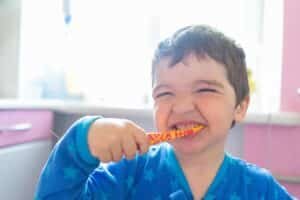 Preschoolers thrive on a good routine. There is little they love more than predictability. You may notice this when you watch their beloved tv shows. Good early childhood education is predictable and uses repeated scenes and phrases to help toddlers and preschoolers learn and build confidence. Since they love knowing what’s coming next, build responsibility into daily routines and create clear expectations. For example, help your child establish routines for self-care and chores that happen in the morning, after school and before bedtime, and do them consistently. This helps build confidence and safety in young children, and prepares them for greater responsibility as they grow.
Growing Responsibility
Sometimes responsibility feels hard, and that’s okay! Toys get missed, spills happen, shoes get put in the wrong cubby. Giving age-appropriate responsibility grows more than healthy habits. It grows happy, capable and confident learners. At home, and at Wishing Well, every small task is an opportunity for growth. Mistakes are part of the process. As we offer guidance, instead of just correction, we can help build resilience and problem-solving skills in your toddlers and preschoolers. We would love to walk alongside you and your children as they learn the key lessons of responsibility: “I matter. I belong. I can do things!” To learn more, book a tour today!